Before you start: are you in scope?
As a general rule, NIS2 applies to medium and large companies in the sectors listed in the directive, and to some entities regardless of size. If you have not checked yet, NIS2 compliance: what changes for the IT department explains who is affected and what changes. Before going further:
- Check with your legal advisers whether your organization is an essential entity, an important entity or neither.
- Review what your customers require: many ask their suppliers for these measures even when the law does not.
- Appoint one person to coordinate compliance.
1. Governance and responsibilities
- Management has approved the security policy and the risk management measures.
- There is a security lead with responsibilities defined in writing.
- Management has received cybersecurity training, and there is a record of it.
- There is a review schedule for the measures, at least once a year.
2. Inventory and risk analysis
- An up-to-date inventory of devices, servers, cloud services and applications.
- An inventory of licenses and who they are assigned to.
- A list of user accounts and who can access what, including privileged accounts.
- A documented risk analysis that identifies critical assets.
- A treatment plan: which risk is accepted, which is reduced and with which measure.
This block is the foundation for everything else. If the inventory lives in several spreadsheets, start here: with devices, licenses and access in one place, the rest of the checklist is much quicker to answer.
3. Technical measures
- Multi-factor authentication for email, remote access and privileged accounts.
- System and application patches up to date, with a defined deadline for critical ones.
- Device protection and threat detection.
- Encryption of laptops and sensitive data.
- Automatic backups, with at least one copy outside the main network, and regular restore tests.
- A business continuity and disaster recovery plan.
- Secure communications for emergencies.
4. Incident management and reporting
- A written procedure to detect, classify and handle incidents.
- Clear criteria for deciding whether an incident is significant.
- Owners and deputies for reporting, with their contact details at hand.
- Templates ready for the three notifications the directive requires:
-
24 h
Early warning
A first notice that something has happened.
-
72 h
Incident notification
An initial assessment of severity and impact.
-
1 month
Final report
One month after the notification: description, root cause, mitigation measures and cross-border impact.
- A log of every incident, with its timeline and the actions taken.
- One drill a year to check that the procedure works.
5. Suppliers and supply chain
- A list of suppliers with access to systems or data, and the critical services they provide.
- Security and incident reporting clauses in their contracts.
- Regular reviews of their security, proportionate to the risk.
- Renewal dates under control, so you can review terms before contracts renew automatically.
6. Training and awareness
- Basic cybersecurity training for all staff, at least once a year.
- Specific training for those who administer systems or handle incidents.
- Phishing simulations, with follow-up on the results.
- Written cyber hygiene practices: passwords, devices, email and remote work.
- Onboarding and offboarding with access reviewed: nobody keeps permissions after they leave.
7. Evidence: how to prove it
In an audit, doing it is not enough: you have to be able to show it. Keep these in a known place:
- Approved policies, dated and signed.
- The inventory and the risk analysis, with their latest review.
- Incident and drill records.
- Restore test results.
- Training records for staff and management.
- Supplier contracts with their security clauses.
How Monkinet helps with this checklist
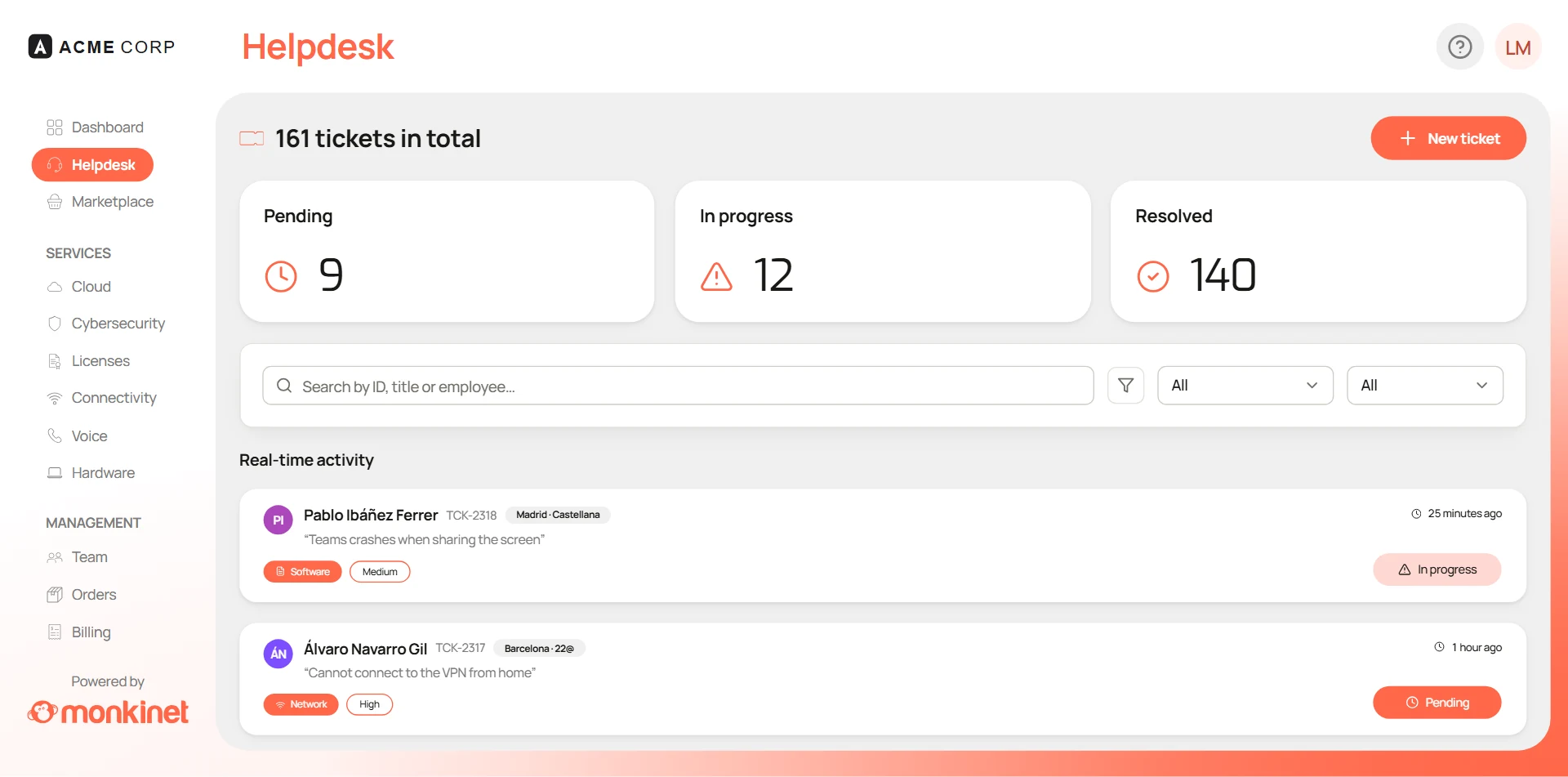
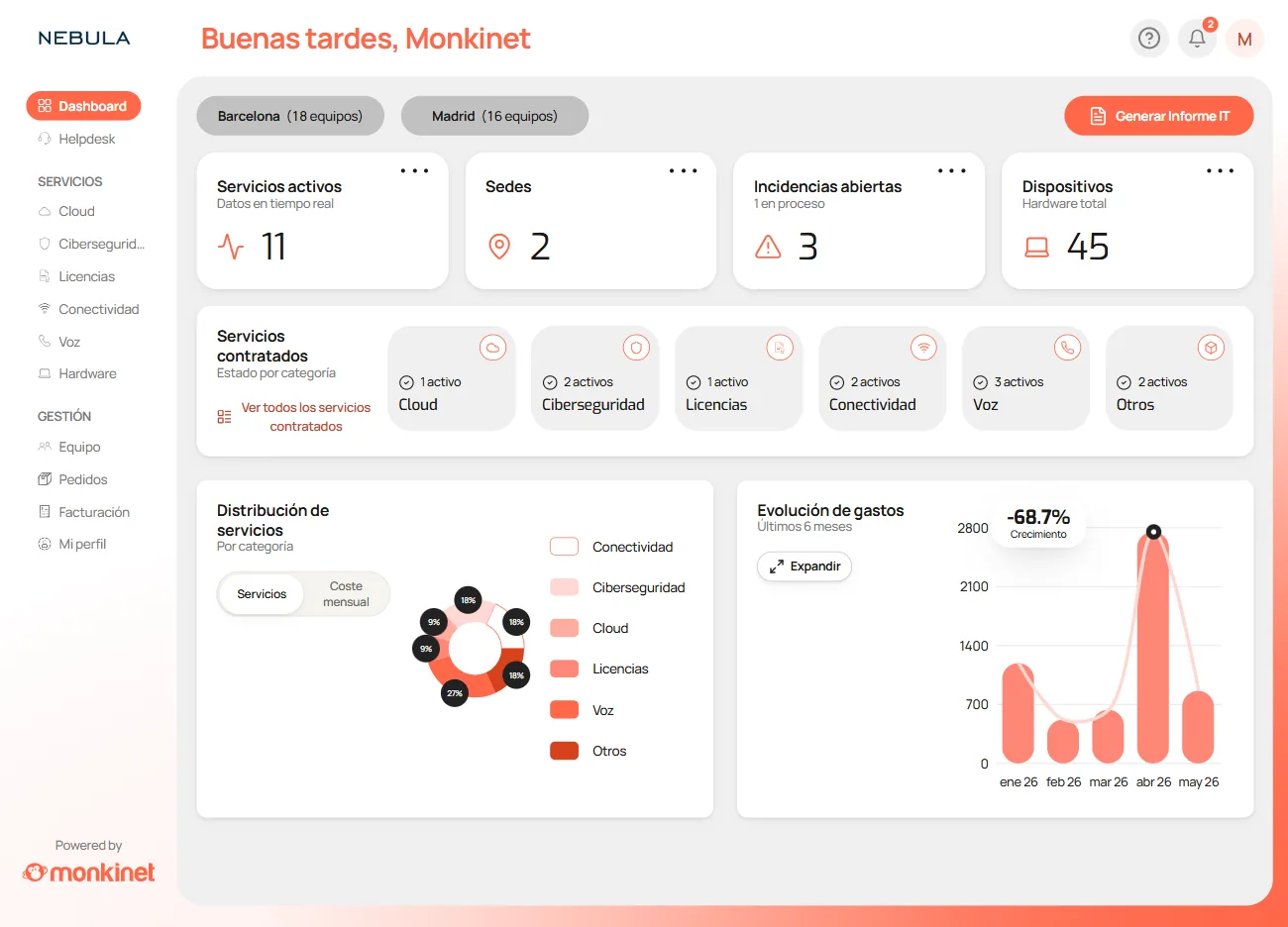
Much of this checklist depends on having the data at hand. Monkinet brings it together in a single dashboard, so many items are answered with a lookup instead of a search:
- Inventory and risk. Devices, licenses and cloud services, with their assigned user, in a single inventory.
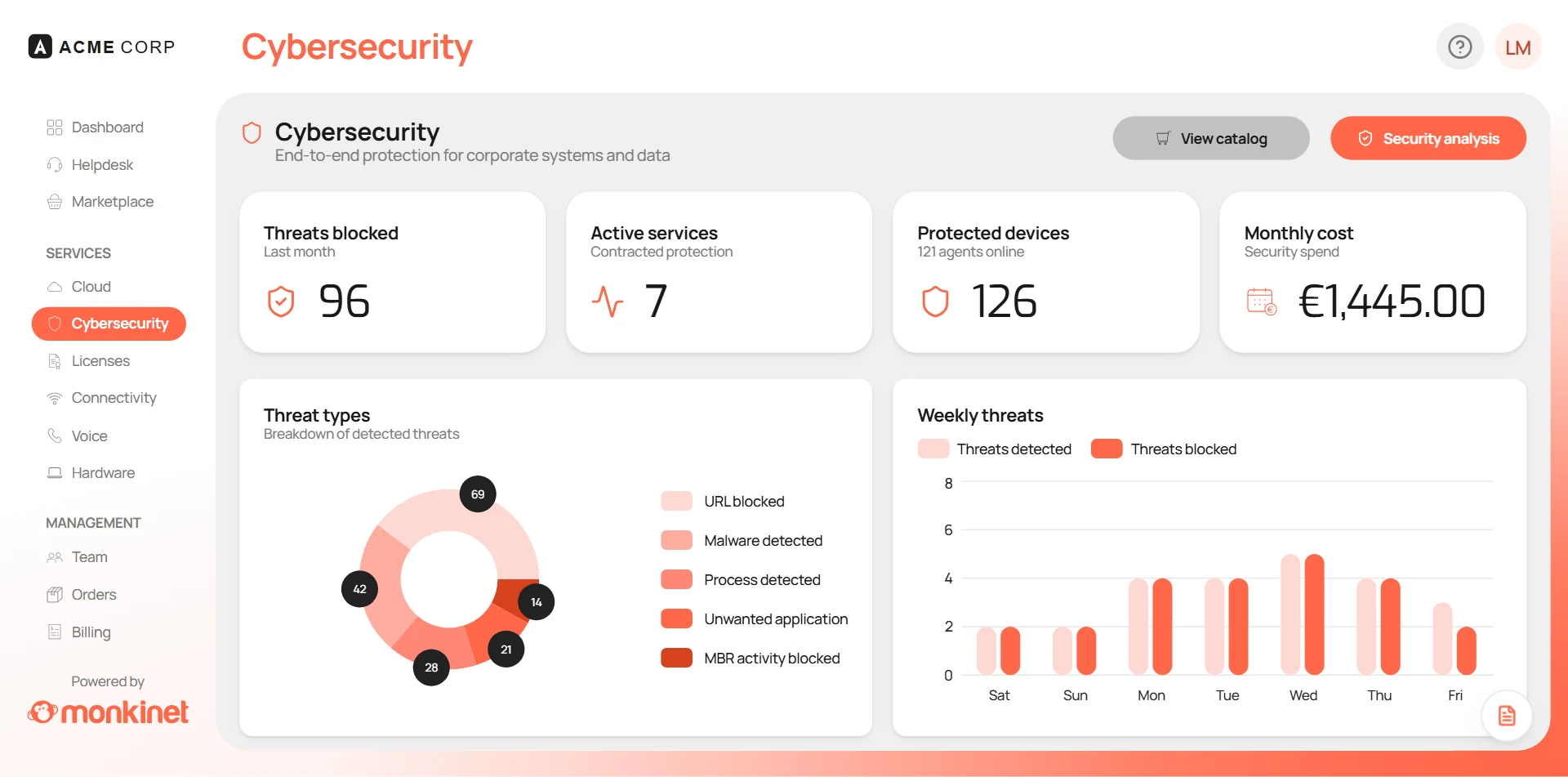
- Technical measures. The Cybersecurity module covers device protection and threat detection, with autonomous patching.
- Incidents. Incident detection and response, with the affected device and user in view.
- Suppliers. Contracts, amounts and renewal dates in one place, with time to review the terms.
- Onboarding and offboarding. Onboarding and offboarding remove devices, accounts and licenses in one go: nobody keeps access after they leave.
- Evidence. Inventory, access, incidents and contracts in the same dashboard when the audit comes.
Conclusion
No checklist replaces legal advice, but this one tells you where to start and what is missing. Go item by item, tick what you already have and turn what is pending into a plan with dates. NIS2 compliance does not happen in a day: it happens by keeping it up to date. And with Monkinet, keeping it up to date means looking at a single dashboard.
- NIS2
- Checklist
- Compliance
- Cybersecurity
Written by the Monkinet Team
We write about IT operations, security and efficiency for teams that manage a lot with few resources.